High-Pressure and Long-Distance Fire Hoses: Securing Water Supply in Wildfire and Large-Scale Emergencies

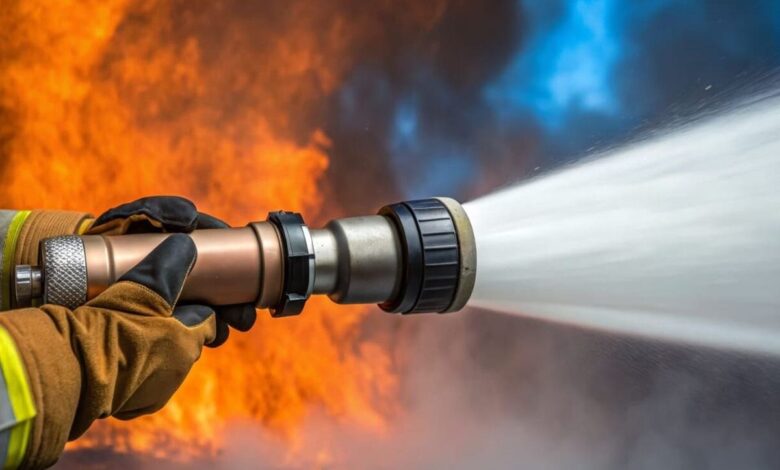
Wildfires and major incident scenarios often unfold in remote areas with little or no fixed water infrastructure. In such settings, firefighters must establish long water supply lines that can extend for several kilometers. These operations are critical for maintaining a reliable water source when natural bodies of water, reservoirs, or mobile tanks are far from the fire line. The hoses used in these situations must combine high pressure resistance with low weight and excellent durability, allowing crews to deploy them quickly over rough ground while still delivering enough water at effective pressure levels.
The demands on this equipment have intensified as fire seasons lengthen and wildfires become more severe. Modern response strategies rely on supply lines that can withstand steep gradients, exposure to heat and sparks, and continuous pumping at high pressures without significant performance loss.
Managing Pressure Over Long Distances
One of the greatest challenges in long hose systems is controlling pressure loss. Every additional section of hose introduces friction and turbulence that reduce water flow to the nozzle. To counter this, manufacturers use smooth inner linings made from advanced synthetic rubbers or thermoplastic coatings that allow water to pass with minimal resistance. Hose diameters are chosen carefully: larger supply hoses help maintain pressure over distance but must remain manageable for teams carrying them over uneven terrain.
Equally important is the integration of relay pumping. Instead of relying on a single pump to move water over several kilometers, multiple pumps are staged along the route to maintain stable pressure and flow. Portable high-capacity units with automatic pressure regulation have become increasingly common in wildland firefighting. This approach ensures that even the most distant attack lines receive enough water to remain effective.
Balancing Strength and Weight
The physical weight of hoses plays a decisive role in the success of extended deployments. Heavy lines slow down crews, increase fatigue, and complicate transport through steep slopes, dense vegetation, or debris-strewn ground. For this reason, manufacturers have focused on lightweight yet robust constructions.
Modern long-distance hoses often use synthetic fibers for reinforcement instead of heavier traditional materials. Outer jackets are engineered to be thin enough for easy handling while still resisting abrasion, UV radiation, and punctures from rough surfaces. Lay-flat designs also make transport easier, as hoses collapse into compact bundles when empty and expand fully under pressure once water begins to flow.
Reliable Connections Under Harsh Conditions
Long hose lines can include dozens of coupling points, each of which represents a potential weak spot. Secure and leak-free connections are essential to maintain pressure and avoid dangerous failures under load. Standardized quick-connect systems, such as those widely used in European firefighting, allow fast assembly without tools and hold up well to repeated use. For larger diameters and high-pressure segments, reinforced flanges and robust gaskets are used to prevent leaks even when hoses expand and contract due to temperature changes or pressure fluctuations.
Careful planning of where to place couplings also affects safety and efficiency. Avoiding bends or locations with high mechanical stress reduces the chance of wear and accidental disconnection during operations.
Tactical Considerations in the Field
Building a multi-kilometer water supply requires more than just durable equipment. Fire crews must plan hose routes that work with the landscape, minimize exposure to radiant heat, and stay clear of falling debris or vehicle traffic. In rugged terrain, progressive deployment is common: crews advance the line step by step as the fire front moves, while pumps are repositioned or added to maintain adequate flow.
Protective measures, such as covering hoses where they cross roads or laying them along natural barriers, reduce the risk of damage. Increasingly, digital mapping tools are used during planning and real-time operation to calculate the most efficient hose paths and optimal pump placement, shortening setup times and improving safety.
Moving Toward More Resilient Solutions
Technological development in high-pressure, long-distance fire hoses is advancing rapidly. New materials combine reduced weight with improved resistance to heat, abrasion, and UV radiation. Integrated monitoring systems are emerging, allowing crews to detect leaks, blockages, or dangerous pressure drops early. Pump systems have become more intelligent, automatically adapting output to terrain and total hose length.
These advances are reshaping how water is delivered to the front lines of major fires. As wildfires grow larger and incidents become more complex, reliable long-distance hose systems are no longer just support equipment—they are a core element of modern firefighting strategy, ensuring that remote operations have the water supply needed to stay safe and effective.
